Beluga Whale vs Minke Whale: Key Differences & Size Comparison
When comparing Beluga Whale vs Minke Whale, we encounter two remarkably different cetacean species that have evolved to thrive in distinct marine environments. The snow-white Beluga, measuring 13-20 feet (4-6.1 meters), stands in stark contrast to the larger Minke Whale, which reaches lengths of 20-30 feet (6.1-9.1 meters). These differences extend far beyond size, encompassing everything from habitat preferences to social behaviors.
While Belugas are known for their distinctive white coloration and flexible neck, Minke Whales showcase a more traditional baleen whale appearance with their streamlined dark gray bodies and characteristic pointed snout. These adaptations reflect their vastly different lifestyles, with Belugas mastering Arctic waters while Minkes range across global oceans.
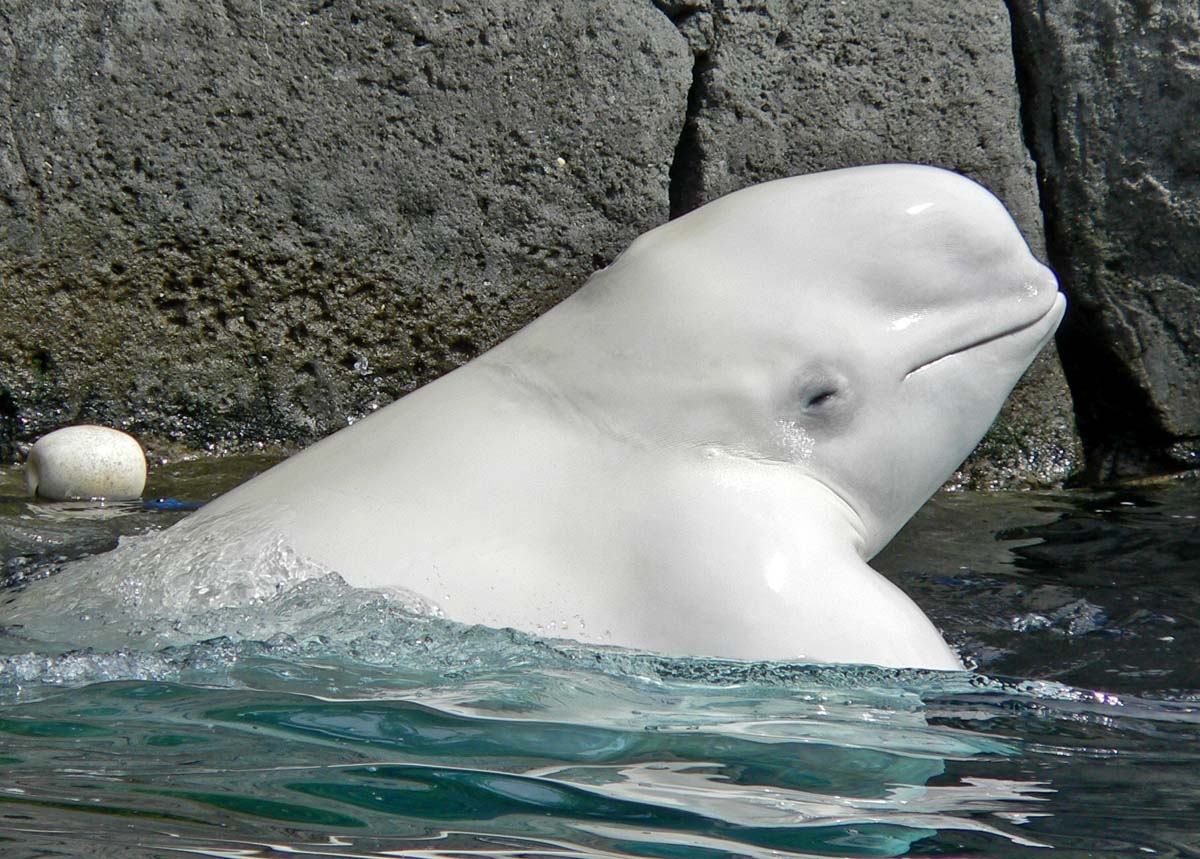
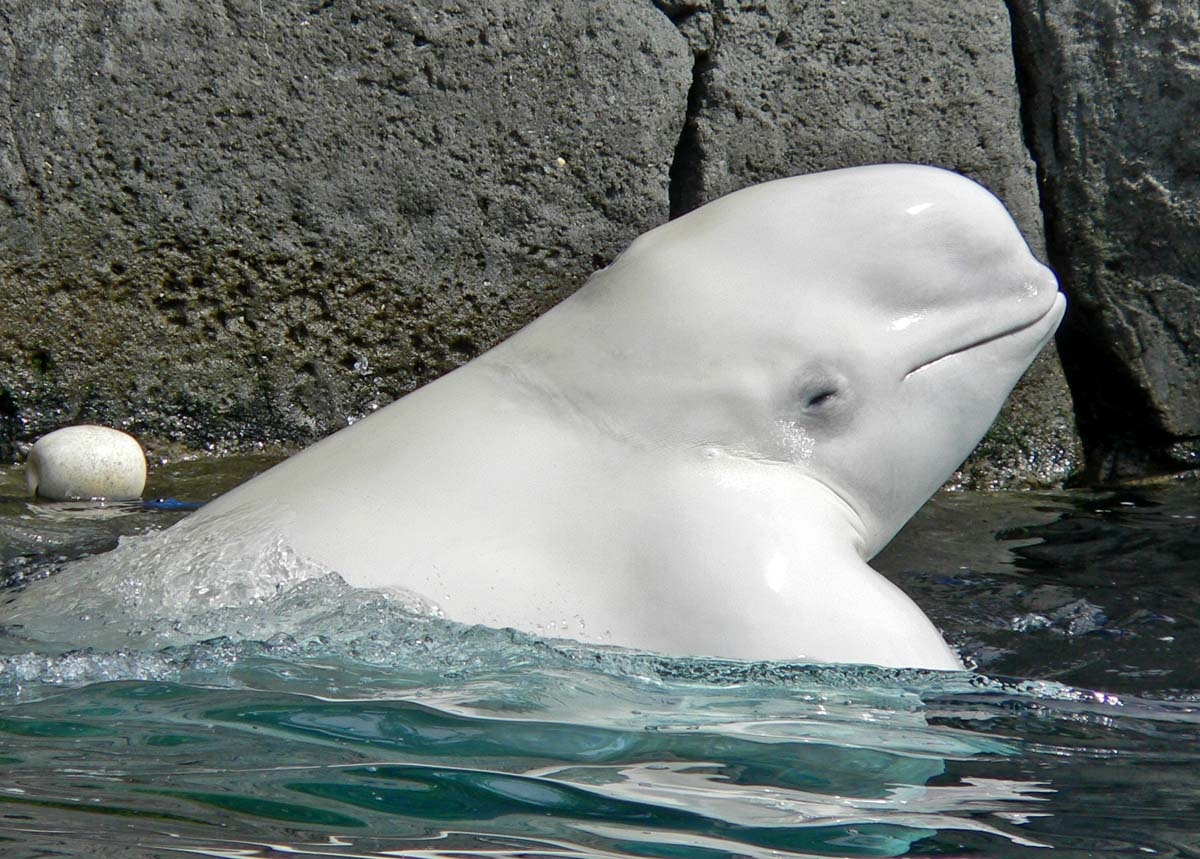
© Stan Shebs / CC BY-SA 3.0
The Beluga Whale, often called the “sea canary” due to its vocal nature, displays its characteristic white coloration and bulbous melon, adaptations crucial for life in Arctic waters. These features enable sophisticated echolocation and communication abilities essential for navigation under ice sheets.
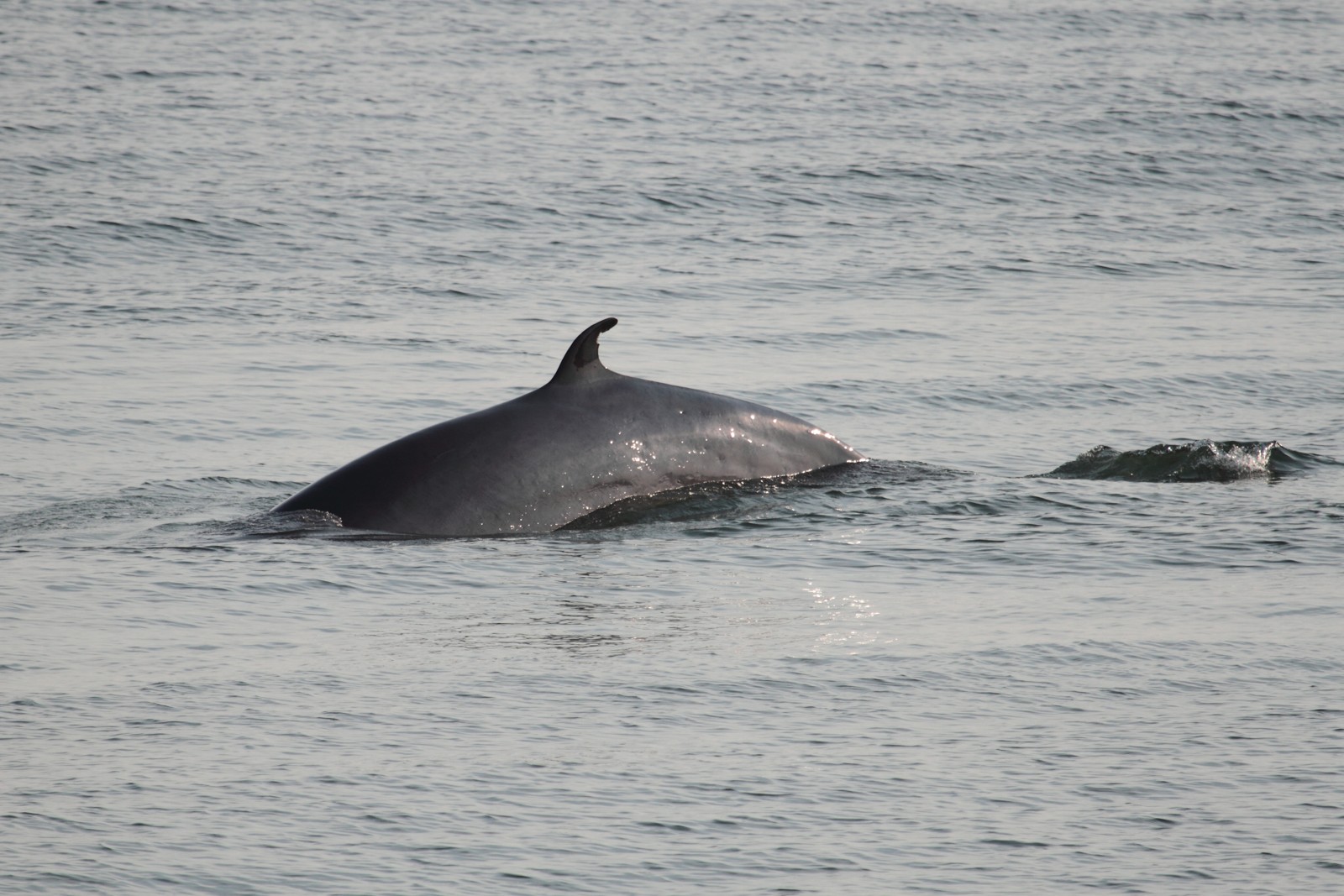
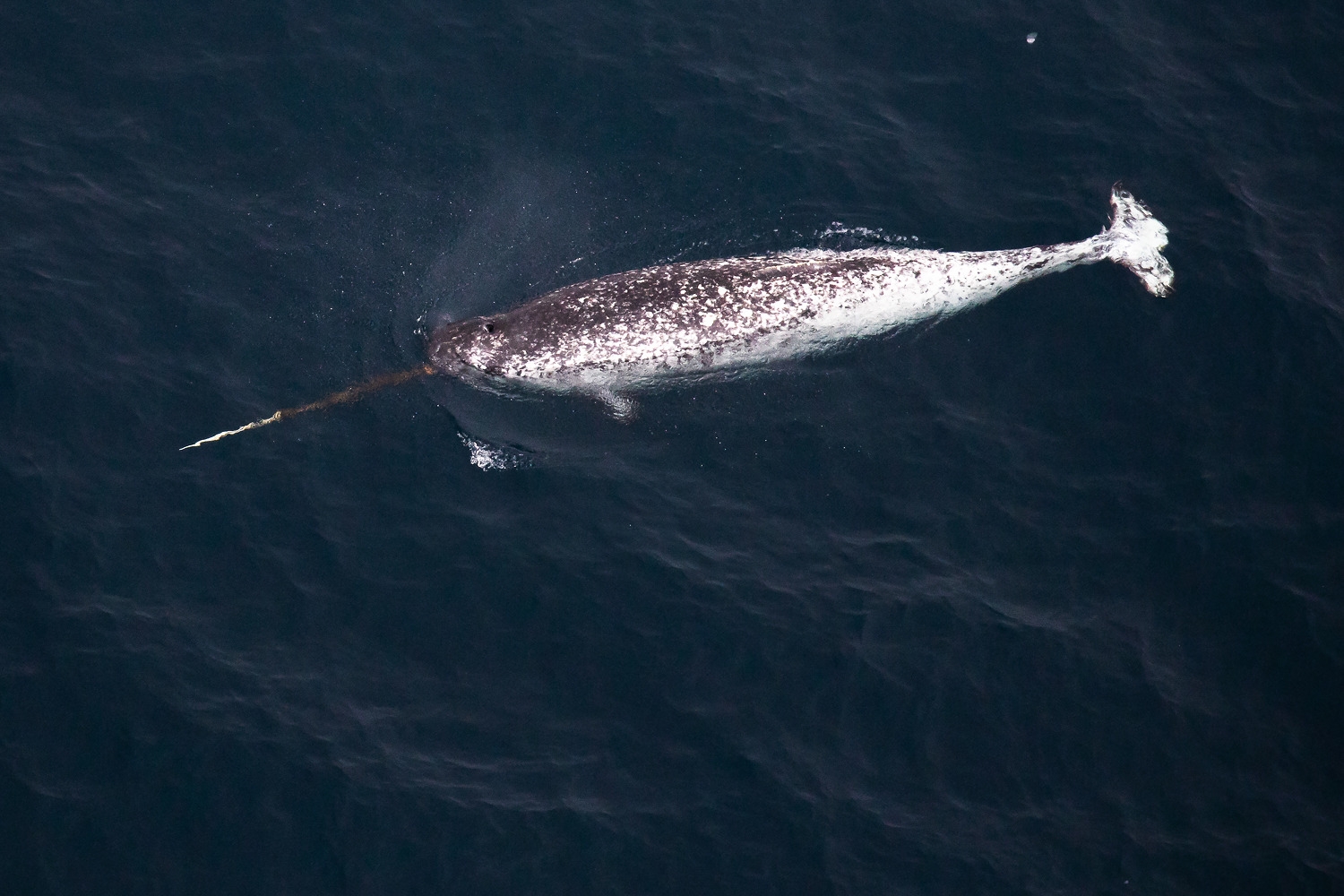
© Cephas / CC BY-SA 3.0
The Minke Whale exhibits its characteristic streamlined form and dark coloration, typical of baleen whales. This smaller member of the rorqual family demonstrates the efficient swimming design that allows it to navigate diverse ocean environments worldwide.
Key Differences: Beluga Whale vs Minke Whale
| Feature | Beluga Whale | Minke Whale |
|---|---|---|
| Size | 13-20 feet (4-6.1 m) | 20-30 feet (6.1-9.1 m) |
| Weight | 2,000-3,500 lbs (907-1,588 kg) | 11,000-24,000 lbs (4,989-10,886 kg) |
| Color | Pure white (adults) | Dark gray/black with white underbelly |
| Diet | Fish, squid, octopus | Krill, small fish, plankton |
| Habitat | Arctic and sub-Arctic waters | Global distribution, all major oceans |
| Lifespan | 35-50 years | 40-50 years |
Habitat and Distribution
Beluga Whales are highly specialized Arctic dwellers, primarily inhabiting the frigid waters around Alaska, Canada, Greenland, and Russia. Their white coloration provides excellent camouflage among ice floes, while their flexible neck allows them to maneuver effectively under ice sheets.
In contrast, Minke Whales demonstrate remarkable adaptability, occurring in all major oceans from polar to tropical waters. These cosmopolitan cetaceans show seasonal migration patterns, moving between feeding grounds in colder waters and breeding areas in warmer regions.
Behavioral Differences
Social Structure
Belugas are highly social, forming pods of 10-100 individuals and maintaining complex vocal communications. Their sophisticated sonar abilities, aided by their distinctive melon, allow for intricate social interactions and hunting coordination.
Minke Whales typically maintain a more solitary existence, though they may gather in small groups during feeding or migration. Their social structure is less rigid, with individuals often operating independently rather than in permanent pods.
Feeding Strategies
The feeding approaches of these species reflect their evolutionary adaptations:
-
Beluga Whales:
- Use echolocation to hunt prey
- Feed on bottom-dwelling fish
- Flexible neck allows diverse hunting techniques
- Primary prey includes cod, salmon, and squid
-
Minke Whales:
- Employ baleen plates to filter feed
- Surface skim-feeding technique
- Gulp feeding on schooling fish
- Consume up to 2,000 pounds (907 kg) of food daily
Conservation Status and Threats
Both species face various challenges in their respective environments:
Beluga Whales
- Listed as Near Threatened by IUCN
- Major threats include:
- Climate change affecting Arctic ice
- Industrial development
- Noise pollution
- Subsistence hunting
Minke Whales
- Listed as Least Concern globally
- Face pressures from:
- Commercial whaling in some regions
- Ship strikes
- Fishing gear entanglement
- Ocean noise pollution
Unique Adaptations
The evolutionary paths of these cetaceans have led to distinct specializations:
Beluga Whales developed:
- Flexible neck vertebrae
- White coloration for Arctic camouflage
- Thick blubber layer (up to 5 inches/12.7 cm)
- Sophisticated echolocation abilities
Minke Whales evolved:
- Streamlined body for efficient swimming
- Baleen plates for filter feeding
- Counter-shading camouflage
- Long-distance migration capabilities
Through millions of years of evolution, both the Beluga Whale and Minke Whale have developed remarkable adaptations that allow them to thrive in their respective niches, demonstrating the incredible diversity of cetacean life in our oceans.