Gyrfalcon vs Peregrine Falcon: Key Differences & Speed Comparison
The Gyrfalcon vs Peregrine Falcon comparison reveals nature’s most impressive aerial hunters, each uniquely adapted to their environments. The Gyrfalcon (Falco rusticolus) stands as the larger predator, weighing up to 4.6 pounds (2.1 kg), while the Peregrine Falcon (Falco peregrinus) typically reaches 3.3 pounds (1.5 kg). Despite its smaller size, the Peregrine claims the title of fastest animal on Earth, reaching diving speeds of 242 mph (389 km/h).
These remarkable raptors showcase different hunting specialties and habitat preferences. While Gyrfalcons dominate the Arctic circle with their powerful build and exceptional cold tolerance, Peregrine Falcons demonstrate unprecedented adaptability, thriving from tundra to urban environments across six continents.
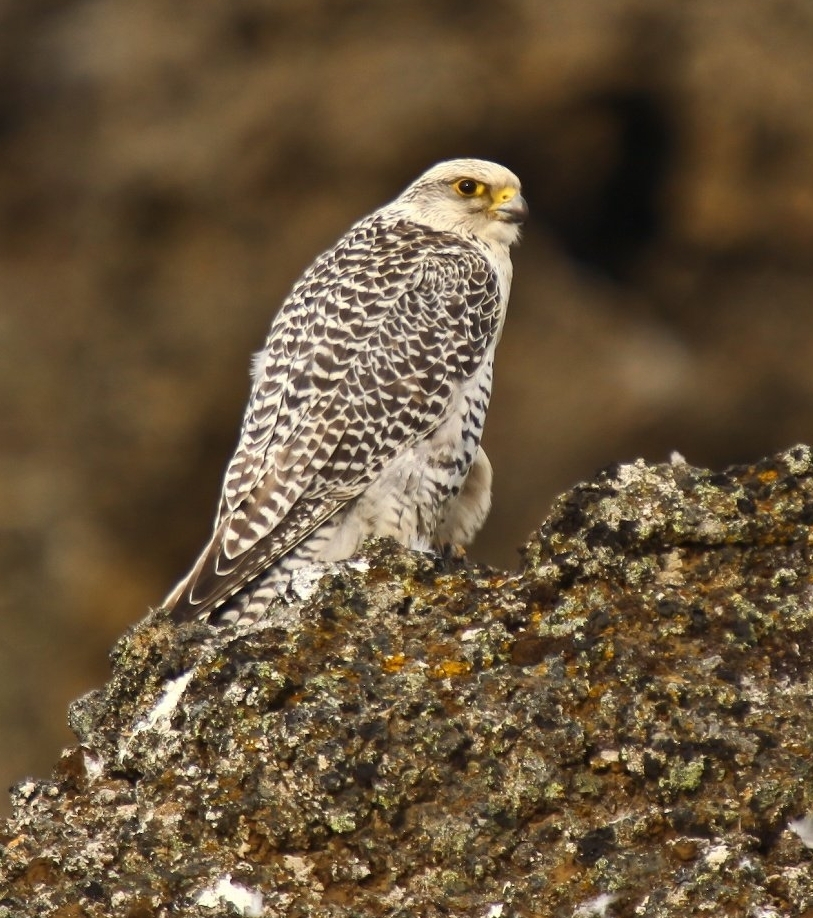
© Falco_rusticolus_white.jpg: Ólafur Larsen derivative work: Bogbumper (talk) / CC BY-SA 2.0
The Gyrfalcon, largest of all falcon species, displays remarkable strength and endurance. Its stockier build and heavily feathered feet enable survival in Arctic conditions where temperatures plummet below -40°F (-40°C).
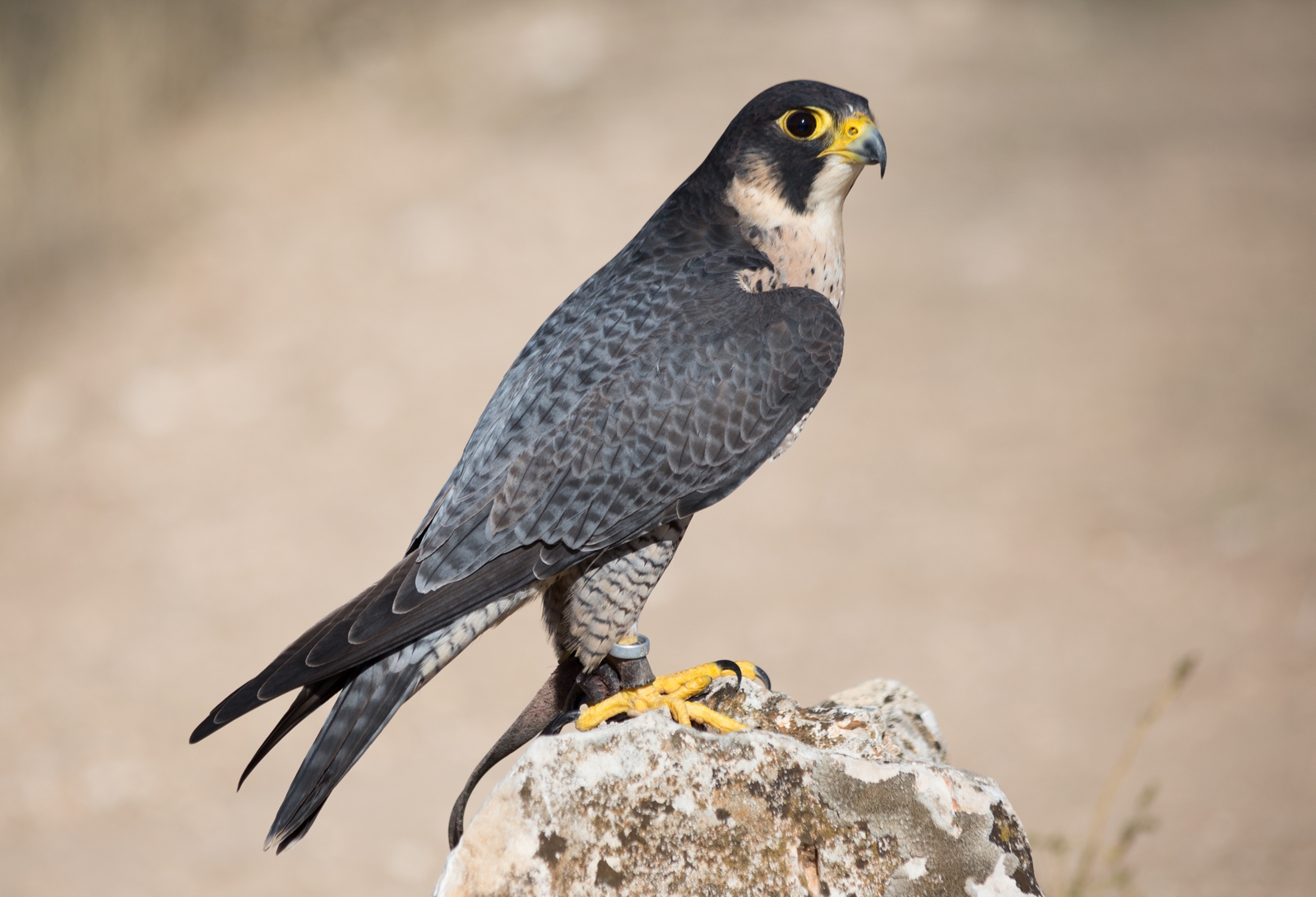
© Carlos Delgado / CC BY-SA 4.0
The Peregrine Falcon exhibits a more streamlined profile optimized for incredible speed. Its distinctive dark hood and facial markings create the characteristic “mustached” appearance that makes this species instantly recognizable worldwide.
Key Differences: Gyrfalcon vs Peregrine Falcon
| Feature | Gyrfalcon | Peregrine Falcon |
|---|---|---|
| Size | 20-25 inches (51-64 cm) | 14-19 inches (36-48 cm) |
| Weight | 1.8-4.6 lbs (0.8-2.1 kg) | 1.2-3.3 lbs (0.5-1.5 kg) |
| Top Speed | 130 mph (209 km/h) | 242 mph (389 km/h) |
| Range | Arctic Circle | Worldwide (except Antarctica) |
| Preferred Prey | Ptarmigan, waterfowl | Pigeons, shorebirds |
| Plumage Colors | White, gray, dark brown | Slate gray, white, black |
Hunting Techniques and Abilities
Gyrfalcons employ powerful, sustained pursuit flights to catch prey, often following potential quarry for extended periods. Their larger size allows them to take down bigger prey, including geese and seabirds. These Arctic specialists have developed remarkable endurance, capable of hunting in harsh winter conditions where few other raptors can survive.
Peregrine Falcons, conversely, utilize their legendary stoop (high-speed dive) to strike prey from above, hitting birds in mid-flight with devastating impact. Their specialized nostrils contain baffles that prevent damage from the extreme air pressure during these high-speed dives.
Habitat and Distribution
The Gyrfalcon maintains a strictly northern distribution, rarely venturing south of the Arctic Circle except during harsh winters. These birds show strong site fidelity, often using the same nesting cliffs for generations. Their thick plumage and robust build perfectly suit the extreme conditions of their Arctic habitat.
Peregrine Falcons demonstrate remarkable adaptability, occurring on every continent except Antarctica. They’ve successfully colonized urban environments, nesting on skyscrapers and hunting pigeons in city centers. This adaptability helped their recovery from near-extinction in the mid-20th century due to DDT contamination.
Who Would Win in a Confrontation?
While the Gyrfalcon holds the size advantage, direct confrontations between these species rarely occur due to different habitat preferences. In theoretical encounters, the outcome would likely depend on the environment and circumstances. Gyrfalcons excel in sustained pursuit and power, while Peregrines possess superior acceleration and maneuverability.
Conservation Status and Threats
Both species face ongoing challenges from climate change and habitat destruction. The Gyrfalcon appears particularly vulnerable to Arctic warming, which affects prey availability and nesting site stability. Peregrine Falcons, though recovered from DDT-related population crashes, continue to face threats from urban hazards and persecution in some regions.
Modern conservation efforts focus on habitat protection and monitoring population trends. The successful recovery of Peregrine Falcons represents one of conservation’s greatest success stories, while the Gyrfalcon serves as an indicator species for Arctic ecosystem health.