Puffin vs Guillemot: Key Differences Between These Seabird Cousins
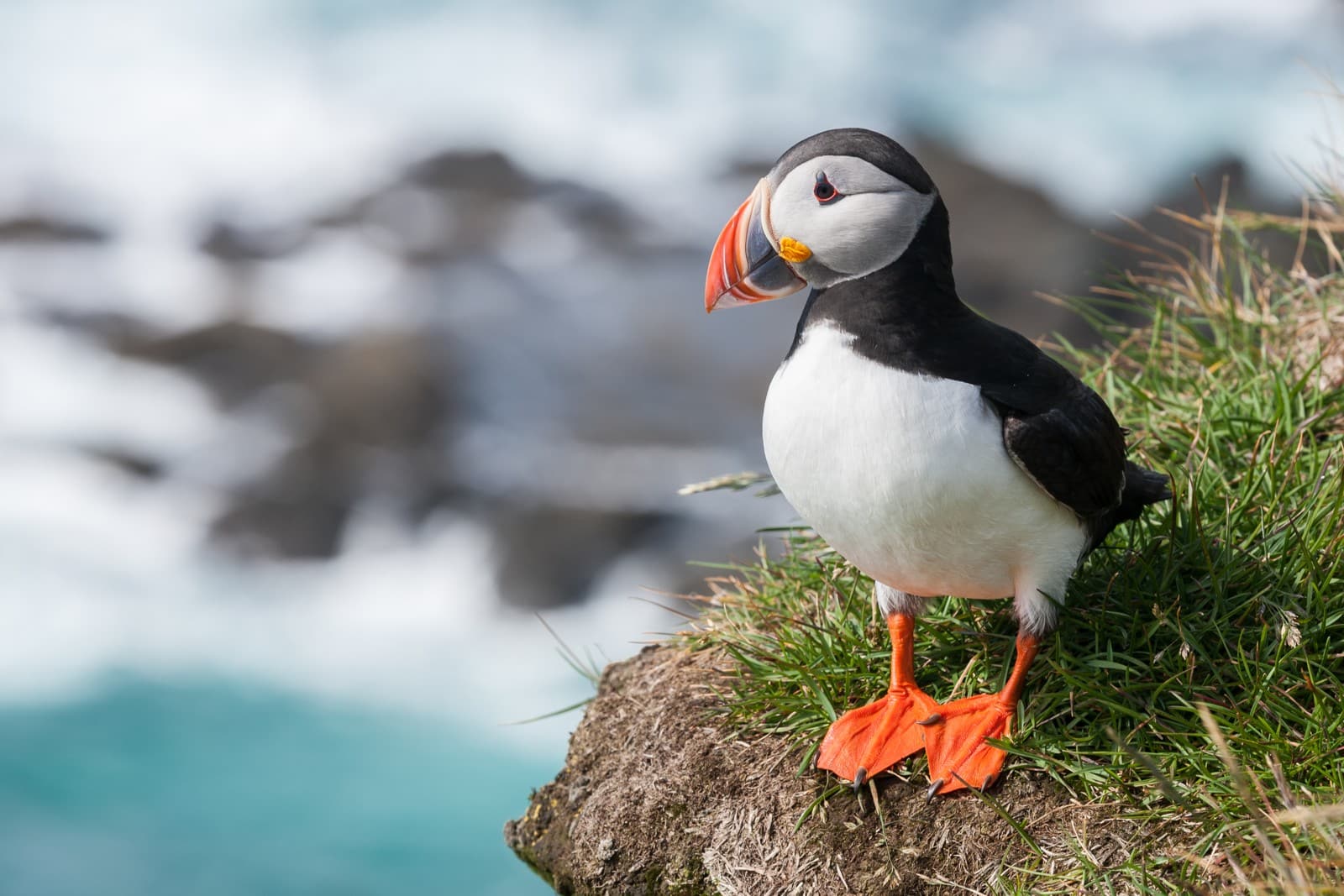
When comparing Puffin vs Guillemot, these remarkable seabirds showcase distinct adaptations despite their close relationship. Atlantic Puffins are smaller, weighing 12-14 ounces (340-400g), while Common Guillemots are notably larger at 26-34 ounces (740-960g). The most striking difference lies in their beaks – puffins sport a distinctive triangular, multicolored bill, while guillemots have a sleek, pointed black beak.
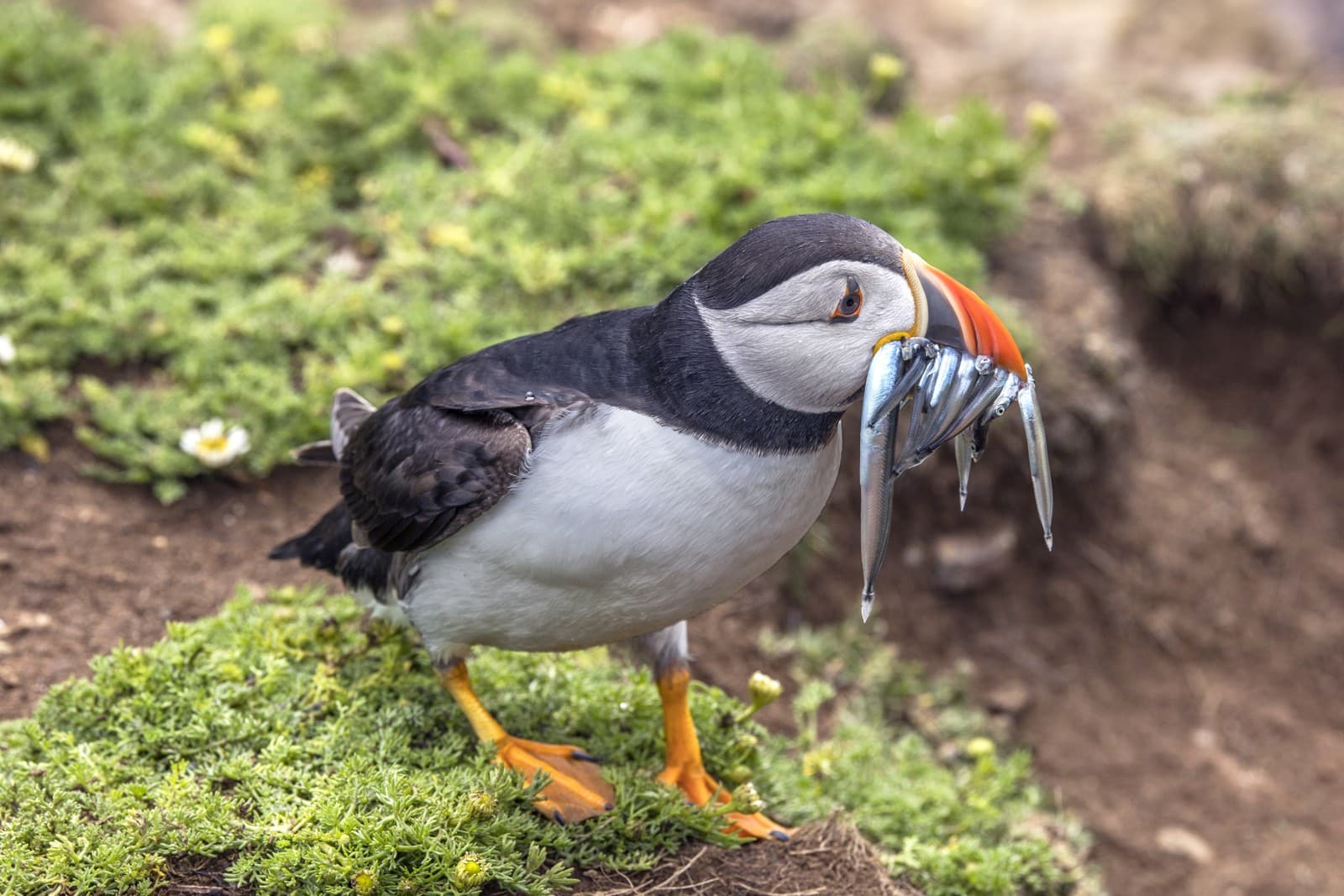
These differences reflect their specialized hunting strategies and breeding behaviors. Puffins are master fish-catchers, capable of holding multiple fish crosswise in their beaks simultaneously, while guillemots dive deeper, reaching depths of up to 590 feet (180m) to pursue single prey items.
<img src=“/images/puffin-guillemot_puffin.jpg” alt=“An Atlantic Puffin stands proudly with a beak full of small silver fish, showcasing its distinctive hunting success. The seabird’s characteristic black and white plumage is clearly visible, with its striking orange and black triangular beak prominently displayed. The puffin’s bright orange webbed feet contrast against the verdant moss and low-growing coastal vegetation where it stands. Multiple fresh-caught fish dangle from its beak, demonstrating the bird’s fishing prowess. The puffin’s round white face, black cap, and alert amber eye create the species’ famous “sea clown” appearance. The natural habitat setting includes scattered yellow wildflowers among the green groundcover, with exposed soil visible in the background.”>
© Charles J. Sharp / CC BY-SA 4.0
The Atlantic Puffin demonstrates its remarkable fishing ability, carrying multiple sand eels in its specialized beak. This distinctive feeding strategy sets puffins apart from their guillemot cousins.
© Andreas Trepte / CC BY-SA 2.5
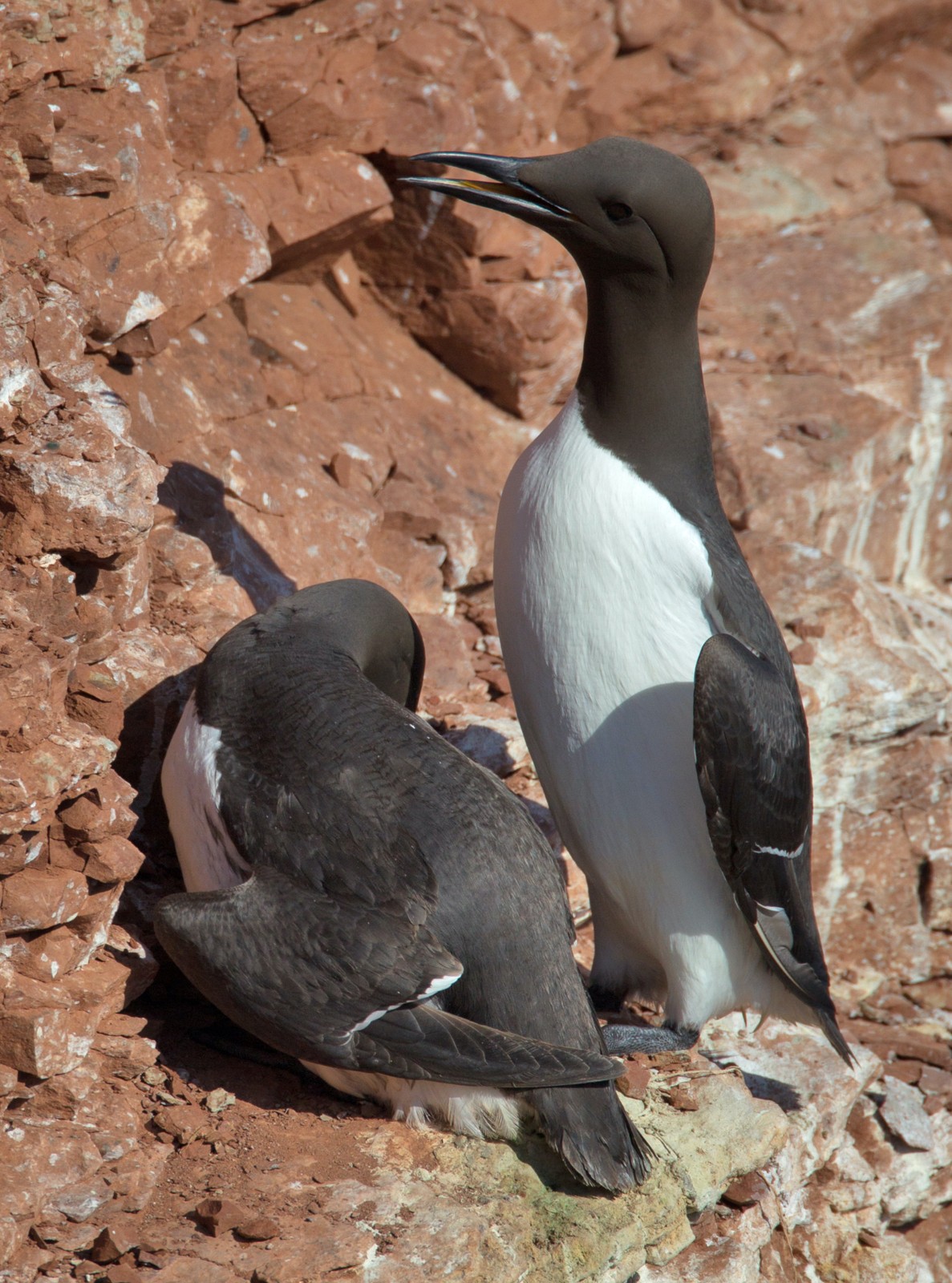
Common Guillemots exhibit their characteristic streamlined form and cliff-nesting behavior. Their sleek bodies and pointed bills are perfectly adapted for deep-diving pursuits.
Key Differences: Puffin vs Guillemot
| Feature | Puffin | Guillemot |
|---|---|---|
| Size | 12-14 oz (340-400g) | 26-34 oz (740-960g) |
| Beak | Large, triangular, orange-black | Thin, pointed, black |
| Diving Depth | Up to 200 ft (60m) | Up to 590 ft (180m) |
| Fishing Style | Multiple fish at once | Single fish pursuit |
| Nesting | Burrows in soil | Open cliff ledges |
| Colony Density | Spread out in burrows | Extremely dense clusters |
Habitat and Distribution
While both species inhabit the North Atlantic, their nesting preferences differ significantly. Puffins dig burrows in grassy cliff tops, creating individual territories spaced apart from neighbors. Guillemots, conversely, nest in dense colonies on bare rock ledges, sometimes packing together at densities of 20 birds per square meter.
Hunting and Feeding Behavior
The hunting strategies of these seabirds reveal fascinating adaptations. Puffins excel at catching multiple small fish in a single dive, using their specialized beaks to hold up to 12 fish simultaneously. Guillemots employ a different approach, diving deeper and longer to pursue individual prey items with their streamlined bills.
Breeding and Social Behavior
Breeding patterns showcase distinct evolutionary paths. Puffins form long-term pair bonds and return to the same burrow annually, investing heavily in a single chick. Guillemots also mate for life but nest in dense colonies where eggs are laid directly on bare rock, developing uniquely pointed shapes to prevent rolling off cliff edges.
Conservation Status and Threats
Both species face similar conservation challenges, including:
- Climate change affecting fish populations
- Ocean pollution and plastic ingestion
- Predation from invasive species
- Human disturbance at breeding sites
However, guillemots show greater resilience to some threats due to their larger population sizes and more adaptable nesting behavior.
Who Would Win in a Competition?
While neither species naturally competes with the other, their different specializations reveal interesting strengths:
- Deep Diving: Guillemot wins (590 ft vs 200 ft)
- Fish Carrying: Puffin wins (up to 12 fish vs 1)
- Flight Speed: Guillemot wins (55 mph vs 50 mph)
- Maneuverability: Puffin wins due to shorter wings
- Size and Power: Guillemot wins due to larger mass
These comparisons highlight how each species has evolved to excel in its particular niche rather than direct competition.
Frequently Asked Questions
Are Puffins and Guillemots Related?
Yes, both belong to the auk family (Alcidae), sharing common ancestors but evolving different specializations over millions of years.
Which Bird Lives Longer?
Puffins typically live 20-25 years, while guillemots average 20-22 years in the wild, though both can survive beyond 30 years.
Do They Share the Same Diet?
Both feed primarily on small fish, but puffins prefer sand eels and herring, while guillemots target slightly larger prey including sprat and capelin.
Which Is More Common?
Guillemots maintain larger global populations, with approximately 7.3 million breeding pairs compared to 6 million pairs of Atlantic Puffins.