Snowy Owl vs Great Grey Owl: Key Differences & Size Comparison Guide
When comparing the Snowy Owl vs Great Grey Owl, size can be deceiving. While the Great Grey Owl appears larger with its impressive 60-inch (152 cm) wingspan, the Snowy Owl is actually more massive, weighing up to 4.5 pounds (2.1 kg) compared to the Great Grey’s 2.9 pounds (1.3 kg). This weight difference reveals an interesting truth: the Great Grey Owl’s imposing size is largely due to its thick feathering, earning it the nickname “Phantom of the North.”
These two northern hunters showcase fascinating adaptations to their respective habitats. The Snowy Owl thrives in treeless Arctic tundra, while the Great Grey Owl masters the art of silent flight through dense boreal forests. Their hunting strategies and physical characteristics have evolved to perfectly suit these distinct environments.
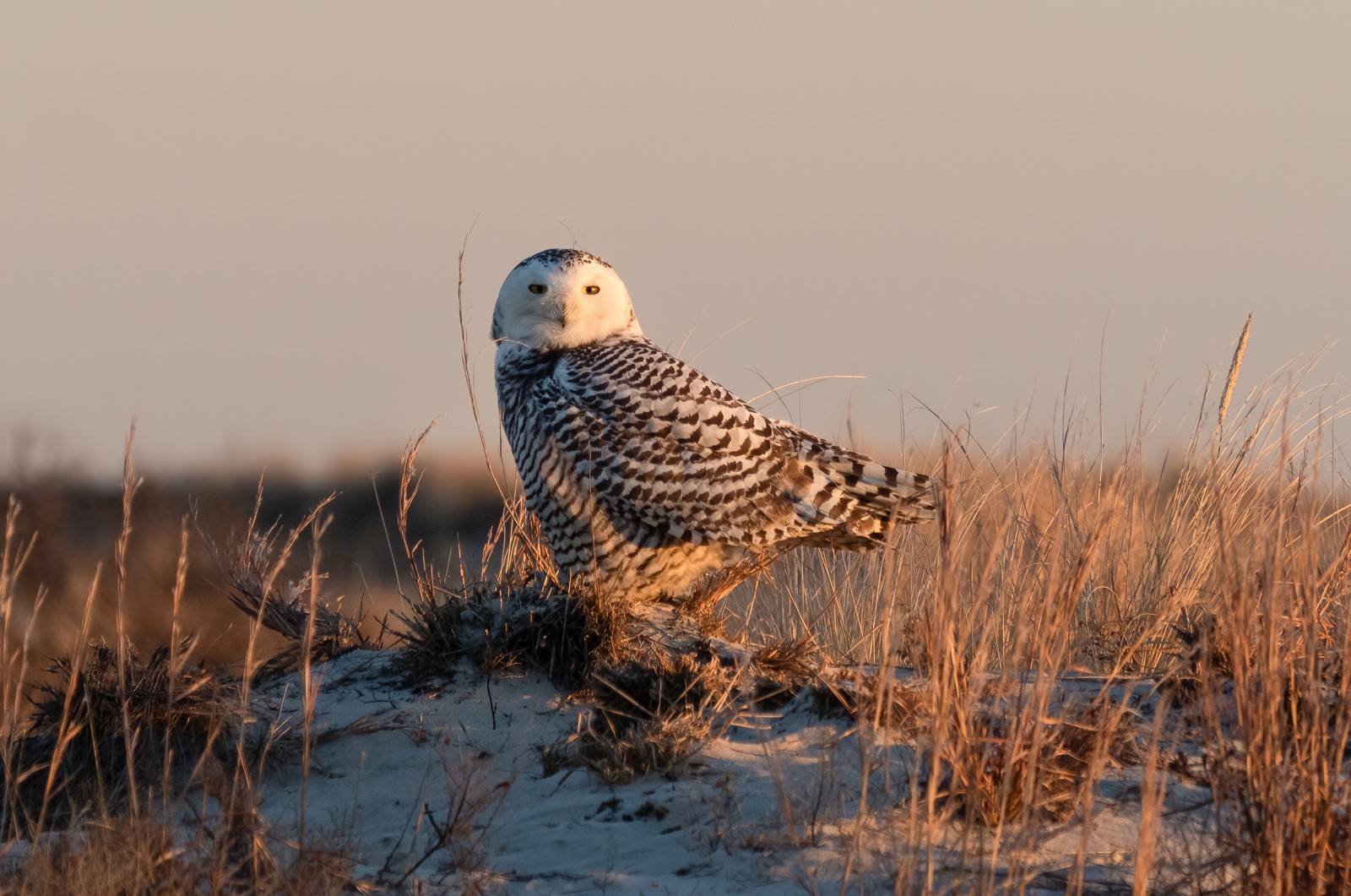
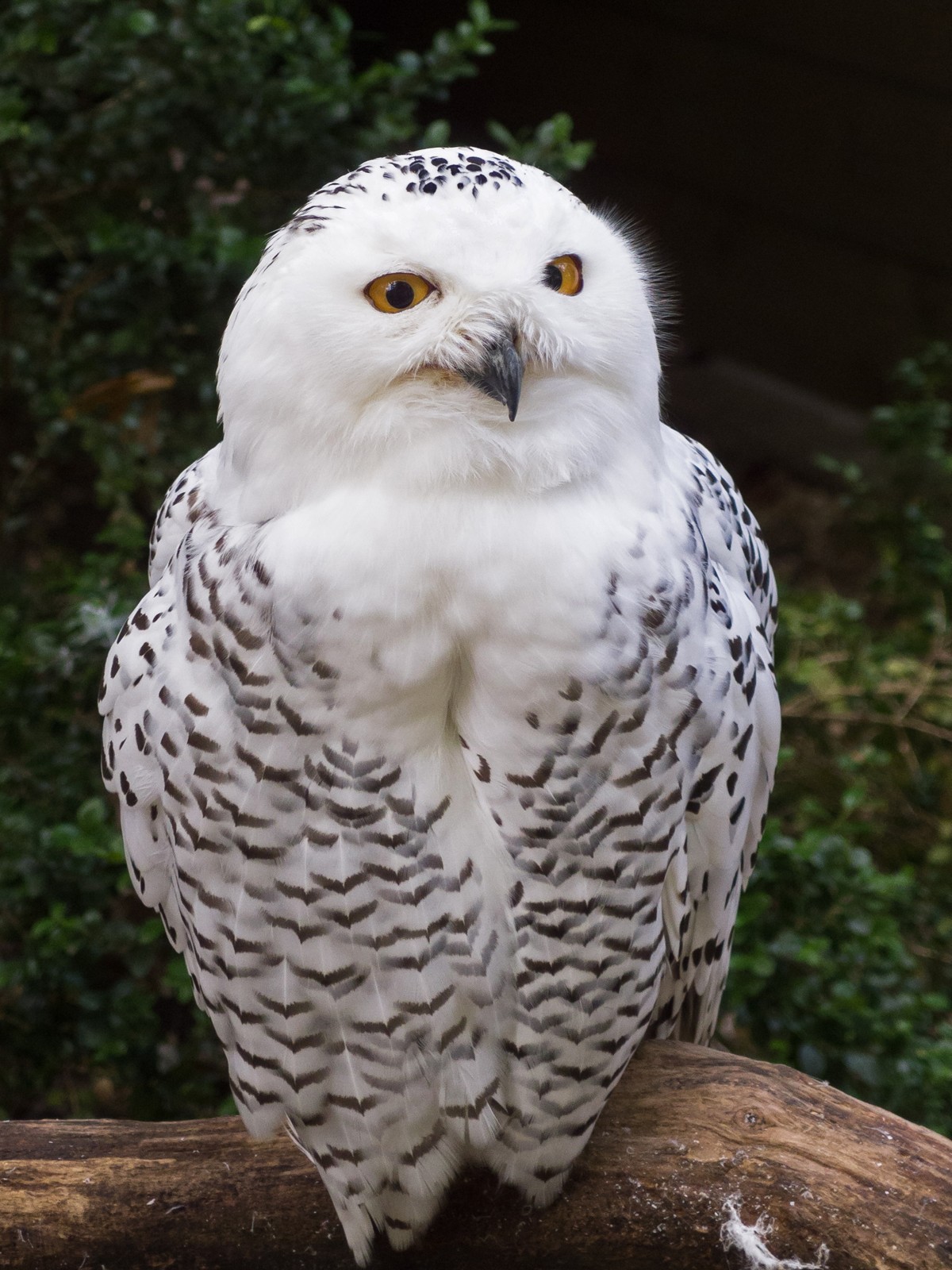
© Rhododendrites / CC BY-SA 4.0
The Snowy Owl’s powerful build and dense feathering enable it to survive the harsh Arctic climate. Its distinctive white plumage provides perfect camouflage in snow-covered landscapes, while its yellow eyes scan vast open spaces for prey.
<img src=“/images/snowy-owl-great-grey-owl_great-grey-owl.jpg” alt=“A Great Grey Owl perches alertly on a bare diagonal branch against a vivid blue sky. The owl’s distinctive facial disc features striking yellow eyes and a black-and-white “bow tie” pattern beneath its beak. Its mottled grey and brown plumage shows intricate barring patterns across its chest and wings, while its large rounded head displays the species’ characteristic concentric circles of feathers. The owl’s impressive size is evident even at rest, with its thick, robust body maintaining perfect balance on the weathered branch. The raptor’s natural camouflage coloring contrasts dramatically with the clear azure background, creating a powerful portrait of this majestic northern forest predator.”>
© Cephas / CC BY-SA 3.0
The Great Grey Owl’s remarkable facial disc and asymmetrical ear openings make it a supreme hunter in dense forests. Its distinctive grey plumage and intricate feather patterns provide excellent concealment among tree bark and shadows.
Key Physical Differences
| Feature | Snowy Owl | Great Grey Owl |
|---|---|---|
| Weight | 3.5-4.5 lbs (1.6-2.1 kg) | 1.9-2.9 lbs (0.9-1.3 kg) |
| Wingspan | 49-57 inches (124-145 cm) | 54-60 inches (137-152 cm) |
| Body Length | 20-28 inches (51-71 cm) | 24-33 inches (61-84 cm) |
| Eye Color | Yellow | Yellow |
| Plumage | White with variable black barring | Grey with complex brown patterns |
| Facial Disc | Less pronounced, white | Large, grey with concentric rings |
Habitat and Range Comparison
The Snowy Owl’s territory spans the circumpolar Arctic, breeding on tundra and hunting across vast open spaces. During winter, some individuals migrate south into southern Canada and northern United States. In contrast, Great Grey Owls inhabit dense boreal forests across North America and Eurasia, rarely venturing into open areas except when hunting in forest meadows.
Hunting Behavior and Diet
Snowy Owl Hunting Strategy
- Hunts primarily during daylight hours
- Relies on visual hunting from elevated perches
- Main prey: lemmings and voles (up to 1,600 per year)
- Can catch prey on the ground or in flight
- Capable of taking larger prey like ptarmigan and ducks
Great Grey Owl Hunting Strategy
- Primarily nocturnal hunter
- Uses exceptional hearing to locate prey under snow
- Specializes in voles and pocket gophers
- Can plunge through snow up to 18 inches (45 cm) deep
- Rarely takes prey larger than small rodents
Breeding and Nesting Differences
Snowy Owls nest directly on the ground, typically on slight rises in the tundra. They lay 3-11 eggs depending on prey abundance. Great Grey Owls, however, utilize old raptor nests or broken-topped trees in dense forests, typically laying 2-5 eggs regardless of prey availability.
Conservation Status and Threats
Both species face challenges from climate change, but in different ways. Snowy Owls are particularly vulnerable to Arctic warming, which affects their primary prey species and breeding habitat. Great Grey Owls face threats from forest fragmentation and logging practices that reduce suitable nesting sites.
Who Would Win in a Confrontation?
While such encounters rarely occur naturally, the Snowy Owl’s greater mass and aggressive territorial behavior would likely give it an advantage in any direct confrontation. However, these species’ different habitat preferences mean they rarely compete for resources or territory in the wild.
Both the Snowy Owl and Great Grey Owl represent remarkable examples of specialized evolution, each perfectly adapted to their respective environments. Their different hunting strategies, physical characteristics, and behavioral adaptations showcase the incredible diversity of northern owl species.